Awarded the Laureate Global Fellowship

Dear Friends and Readers,

I hope you’re doing well. I am writing this post to gladly announce that I have been selected to be 1 of 20, from among thousands of applicants worldwide, to be awarded the “Laureate Global Fellowship”  as part of the YouthActionNet program by the International Youth Foundation.

Launched in 2001 by the International Youth Foundation, YouthActionNet strengthens, supports, and celebrates the role of young people in leading positive change in their communities. Each year, 20 exceptional young social entrepreneurs are selected as Fellows following a competitive application process. The year-long Fellowship program includes:

  • Skill-building
  • Networking and Resources
  • Advocacy

You can read more about the 2012 Laureate Global Fellows Announcement and check my profile and the other 19 Fellows on the Meet the Fellows Page. Moreover, you can better understand Aie Serve, the organization that I’ll be representing, by visiting its Website and its Facebook page.

I’m excited about this year-long fellowship and eager to learn, grow, network and share! 🙂

3 Elements of Mind Mapping

Image

Many have seen me use mind mapping in meetings, workshops, brainstorming sessions and even in project planning. Now what many don’t know is how and when to use mind maps. So I’m going to share with you some quick insights on its origin, usage and basic guidelines.

Origin

“Min-Map” as a term was made popular by Tony Buzan in Britain in the 1950s though the term itself was present before. Nevertheless, visual representation of information is not a novel idea, it dates back to the third century when Porphyry of Tyro, a philosopher, graphically represented Aristotle’s concepts. Back then they knew the value of graphical representation of ideas and it’s still valid till today…people retain graphical information more than textual.

Usage

If, like most people, you think that mind maps are a tool for brainstorming only…think again! It can be used in a multitude of ways..some of them are:

  • Note Taking
  • Project Planning
  • Cause-Effect Analyses
  • Root-Cause Analyses
  • Brainstorming
  • Evaluation
  • Creativity Enhancing
  • Concept Explanation
  • Listing of Related Items

Obviously the list is not exhaustive, but it gives you a good idea of where to start.

Guidelines

Now if you’re planning to do a mind map, here are few recommendations by Buzan himself (with personal amendments) to ensure you’re utilizing it well.

  • Start with a word or image at the center.
  • Use not only words but also images, diagrams, drawings or anything that helps in expressing.
  • Switch between Upper and lower cases when needed to stress on some main ideas.
  • Each word/item is to be put on a line by itself, they don’t like sharing the same line.
  • All items must be connected starting from central idea/word/image and growing outwards, no hanging fruits.
  • Draw thicker/longer lines for more “important” ideas.
  • Use different colors for branches, ideas..etc. to stress on differences.
  • Try out several small mind maps to find your style before you start using it for business or studying.

I hope the above helped a little bit and I wish you the best of luck in mapping your mind!

5 Dos & Don’ts of Leading Volunteers

Being a volunteer myself involved in leading volunteers, I get to reflect often on how things are done and how to improve.

It is without doubt that leading volunteers tends to be tricky as you’ll have to ensure motivation and commitment are high at all times. Moreover, you’ll need to take care of the feelings and aspirations of the volunteers, no matter how young or old they are.

So to make things simple, I am going to share with you 5 Dos and 5 Don’ts in managing and leading volunteers:

Dos:

  • Thank volunteers at every milestone, every good report, every job well done. There is no upper limit of how much you can thank them and how. It can range from a simple thank you email, a tap on the shoulder, to inviting them for a free dinner/lunch/get-away.
  • Give volunteers space to make decisions and have a say in what is being done. Barely anyone likes to do donkey work or to simply follow steps given, let the volunteer role be more demanding and challenging.
  • Lead by being a role model, show the way and be the first to step up for action. It takes people a very short time to realize preachers from doers.
  • Follow up, follow up, follow up… oh and did I say it’s important to follow up? You wont imagine how smooth things will go if you just remind people if they missed something ,follow up on tasks to be done and make sure things are progressing as planned. If you just sit there and expect volunteers to get things done without any follow up..at least at the beginning, then you’ll be surprised.
  • Be friendly, polite and respectful. Yes they may seem trivial, but so many times discussions, emails or meetings can become tense, issues urgent, stakes high…that you might lose your temper, say something mean, be a bit harsh or disrespectful. Once you do that..you know you’re going to lose some one from the team or lose their trust and respect to say the least.

Don’ts:

  • Don’t underestimate any volunteer’s abilities, knowledge, network or creativity. You’ll be surprised with how much people can do when you believe in them.
  • Don’t blame or criticize volunteers publicly. Keep morale high and respect of others to each other and to yourself, if you have something negative to say…say it one-to-one.
  • Don’t take all the credit. Give credit where credit belongs… if the team is doing a good job, you owe them the credit, not yourself.
  • Don’t be biased for personal reasons. Give work, credit or thanks for those who are doing work…not for those you like or you’re friends with.
  • Don’t keep information hidden to yourself. Sharing knowledge, experience, information, contacts ..etc. with your  team is key to show them you trust them and to empower them with what they need to lead…to become self-motivated and self-managed.

I hope those few things help you out! 🙂

Other Interesting Posts:

Project Management for Entrepreneurs

I have been doing some enthusiastic research on the topic, and I have come to realize that most of the current corporations and governments are not being able to provide enough jobs for the hundreds of thousands of young Arabs who graduate every year. Besides, those amongst them that were planning on emigrating lost their chance to travel to the US or Europe for dream jobs due to the economic downturn.

With 60% of the Arab nation being under 30 years old, the number of educated individuals is rising, and yet the supply of jobs is inadequate. In this context, numerous institutions, banks, and government agencies are focusing on fostering entrepreneurship among youth.

Consequently, hundreds of startup projects and initiatives are being launched annually by young entrepreneurs who have the education, the idea, the drive, but lack the experience and the systematic approach to enhance their chances to succeed in their ventures.

This gap has certainly led to numerous failed initiatives, shattered dreams, and lost investments. Imagine all those young aspiring youth, full of enthusiasm and creativity, but crushed by their own inability to drive their business enterprises to success.

The fact is, good ideas are a dime a dozen. The true value is in the ability to transform those ideas into reality…and rare are those that have the intrinsic knowledge to go through the process. In this context, I have realized that project management skills, knowledge and tools come in very nicely to fill a gap for the aspiring entrepreneurs and empower them to be able to transform their ideas into a reality.

So after some well-thought of analysis, I have pinpointed 5 project management mantras from which entrepreneurs can surely benefit from:

  1. Ability to clearly define the scope of their startups, products, services and communicate it clearly.
  2. Knowledge of how to break down the scope of work into clear and comprehensive work packages, schedule the work packages, and work on a budget accordingly.
  3. Skills in recruiting the right people, engaging them, and motivating them to work synergically.
  4. Communication skills with main focus on unifying terminology used, choosing the proper communication channels, and disseminating the right information.
  5. Expertise in understanding possible risks that are inherent to new ventures and ways to manage them. This usually becomes better with time…trial and error being the best tutor.

That’s what I have in mind so far, I hope it helps. Knock them out!


Other articles that might be of interest:

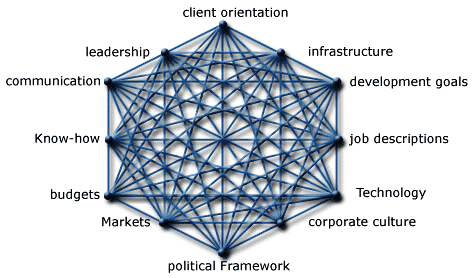
Systems Thinking: Understanding the Complexity of Our World

Systems Thinking is based on the field of system dynamics, founded  by MIT professor Jay Forrester in 1956. The idea behind systems thinking is to be used when analyzing change, interventions and solutions to consider how the component being under study is interacting with other components in the system.

So for example, if we’re trying to introduce new roles in the organization or solve a social issue or introduce new projects and initiatives in the community or organization…we need to consider how those interact with other parts of the system. Many of the traditional methods take a sequential approach to analyzing issues, systems think
This leads us to actually ask, what is a system? Well in a nutshell, a system is a group related, interdependent, bound and related components that interact together. So the computer you’re using is a system, organization you work in is a system, the city you’re in is a system, the country you’re in is a system. In this context, systems can be a “component” of a bigger system. Thus our world is constantly interconnected and has multiple influences from the broader system on the smaller ones, and vice versa.ing on the other hand focuses on the big picture and how are it’s components interacting thus a more complex and iterative approach.

For example, the company’s “system” is made up of:

  • Policies & Procedures
  • Human Capital
  • Facilities & Equipment

So to introduce a change in one of those 3 elements, whether it’s team performance or overall cost reduction, there will be an impact on the other 2 elements and thus in many organizations instilling some change in one element will end up leading to un-expected changes in the other and thus the “original” problem would be resolved, but other problems would’ve popped up.

The key benefit of Systems Thinking is that it provides a better way for analysis and for solving most complex problems that are plaguing our world from governments to communities to business and so on.

Systems Thinking is being used in very wide spectrum of fields today and this proves that the people are becoming aware of it’s value. Some of the fields where it is being utilized are:

  • Engineering & Construction
  • Management & Consultancy
  • Environment
  • Health & Medical Services
  • Manufacturing & Industry
  • Business Analysis
  • Project Management
  • Policy Making & Governance
  • Community Development
  • Computing & Information Technology
  • Sustainable Development

In conclusion, with the increasing complexity of our world today it becoming a necessity to be able to see the “big picture” and understand the systems we are working with or else our proposed solutions and improvements will fail to reach the impact expected with long lasting sustainability.

Project Management for NGOs: Lecture Given to PMI Lebanon Chapter

Last month I’ve given a lecture/session titled “Project Management for NGOs” to the PMI Lebanon Chapter as part of their monthly lectures.

In this context, I thought of sharing it with you. So below you’ll find the session description, learning outcomes and the link to download the presentation for your own knowledge and entertainment…. let me know what you think! 🙂

Session Description/Summary:

The world today has hundreds of thousands of active NGOs majority of which are project and program based and depend on ongoing grants and funding to secure resources for their projects. With grants and funding summing up to hundreds of millions of dollars annually, the amounts being lost on failed projects, unmet objectives and re-work is counting up to tens of millions of dollars.

Many leaders of NGOs consider this as a reasonable and un-escapable price to pay due to the fact that it is hard to recruit enough qualified project and program managers in the NGO field due to the short period of engagement, low wages with respect to private sector and lack of well identified project management training, tools and techniques.

With thousands of program managers, program coordinators, project managers, project coordinators, assistant program and project managers and so on and so forth, there is a huge gap to be filled for both the organizations and the individuals working in them.

What many don’t realize is that PMP standard can apply to NGOs by simply matching many of the terminology that is used by PMP with those present in NGOs. This lecture will help you understand how.

Lecture Learning Objectives:

  • Understand and Define an NGO
  • Identify the Numerous Types and Fields of Work of NGOs
  • Understand the NGO Project Life Cycle in Most NGOs
  • Map NGO Project Related Terminology with PMI’s Terminology

Link to Presentation in PDF: PMI Leb Chapter – PM for NGOs Presentation by Afif Tabsh – April 2012

Other Posts Worth Reading:

NGOs, Project Management & Serendipity

NGOs play an essential and integral role in the sustainability and growth of our communities and environment. They deal with a wide spectrum of topics including but not limited to orphans, elderly, recycling, global warming, advocating rights, economic development, education, awareness…etc.

For more than 12 years, I’ve been passionately involved in NGOs and along the road I managed to create some, or be on the Board or advice & consult others. Throughout the years, most of the NGOs I’ve known have been managing projects and programs. They design projects, write proposals & budgets, implement projects, evaluate them and so on and so forth. Yet I long to see some common project management terminology, standards or methodology on how to do all this.

Years ago, the private sector has identified certain standards for project management, best practices, processes, tools, techniques..etc. These standards are helping corporations in all shapes and sizes, from the multi-nationals to the small local enterprises, in achieving their projects on time, within budget and fulfilling the necessary scope. Yet, surprisingly, and in-spite of the fact that most NGOs work on projects; we somehow missed the idea of having an agreed on, industry-wide standard, best practices and methodology . So you might ask yourself and what if we don’t have a standard, what does it really matter? The fact is, many NGOs miss essential project milestones, have projects that go over budget, short of scope and delivered their outputs behind schedule, if delivered at all. Time, effort and money spent to lead to a positive impact on the society sometimes are lost do to lack of proper project management (from planning to implementation to monitoring & evaluation)…but the question is why?

Lebanon alone hosts thousands of registered NGOs as per the Ministry of Interior. Majority of those NGOs are project and program based and depend on ongoing grants and funding to secure resources for their projects. With grants and funding summing up to millions annually, the amounts being lost on failed projects, unmet objectives and re-work is counting up to hundreds of thousands of dollars. That’s if we’re only talking about the monetary value of things. On the other side, consider how many lives could’ve been saved with the same amount of money that has been lost or re-budgeted, how many schools could’ve been built, how many trainings would’ve been developed, campaigns launched…etc.

Many leaders of NGOs consider this as a reasonable and un-escapable price to pay due to the fact that it is a volatile and ever changing industry that becomes active in disasters and emergencies, rather than in times of peace and order. Thus adequate time for planning and assessments isn’t always available. Moreover, I’ve heard several times from people working in the NGOs industry, that it is hard to recruit enough qualified project and program managers. Mainly it is due to the short period of engagement in temporary projects, low wages with respect to private sector and lack of well-identified project management standards, training, tools and techniques.

Yet what many don’t realize is that things are much simpler than that. In most cases, there is no need to recruit highly qualified project managers, if you can build the capacity and empower those that are already there. As for the standards, trainings, tools and techniques, they do exist! The same standards that apply for the private sector, governmental sector, army and others…apply for NGOs, with minor customization. There are two internationally known standards for project management: Prince & PMP. Both of which are very popular, with the second being of a bigger base of certified professionals worldwide.

With thousands of program and project managers/coordinators and teams in NGOs… there is a considerable gap to be filled for both the organizations and the individuals working in them.

We, those passionate about NGOs and the community, should not keep on managing our projects based on serendipity. It’s about time we get our Project and Program leaders trained and certified to live up to their responsibilities and get that impact we are so passionately working for!

We owe it to ourselves, our donors & supporters and most importantly to the community we are serving…so what are we waiting for?!


Other Interesting Posts:

Lessons Learned from Working in IT

In the following article I will try to extract the most notable lessons learned from my experience in the IT field for the past few years.

A quick overview for my dear readers who don’t know my background, I studied Computer Science(CMPS) at the American University of Beirut(AUB) while working at the Computing and Networking Services (CNS) on campus. Following my graduation I worked in IT development at a banking/financial institution while doing some free lance web-development and IT related consultancies.

Overall, I had my share of working on both hardware and software…and the lessons learned all fit in together and I will be pinpointing them as briefly as possible  in the below lines:

  • No problem is too complex. The key to success in this is to decompose the complexity of the issue into smaller manageable parts. Afterwards one only needs to resolve a group of simpler issues that fit in together.
  • Automation is the key to ongoing growth and sustainability of many companies. This is due to the fact that any requested behavior can be mimicked and coded accordingly, with as many exceptions as needed, replacing the need for human interaction with machines.
  • Technology is advancing faster than we expect. The rate at which technology is evolving allows for sophisticated solutions to be designed and implemented with growing speed and ease. What was nearly impossible 10 years ago can be developed in a week today.
  • IT team leaders can make or break the company. One of the keys for successful IT teams is a team leader who knows how to leverage the expertise of the team, provide enough autonomy while still closely overseeing the work.
  • Programming in multiple languages is becoming a must. Knowing one programming language …in our times…is no longer enough to keep with the pace of advancement and to develop the solutions the best fit the needs.
  • GUI is king. Graphical user interface and packaging became as important as the actual functionality of the solutions requested as users demand the simplest and most intuitive tools they can have. People want eye-candy with minimal intellectual effort to use the applications.

In this context, and after checking the above with some of my friends and colleagues, the same lessons apply in most fields and I will definitely be taking those lessons with me in my consultancy and management work from now on.

I hope they help you in one way or another in your career…and I’m open for your comments and suggestions as always. 🙂

Creating Organizational Structures that Work

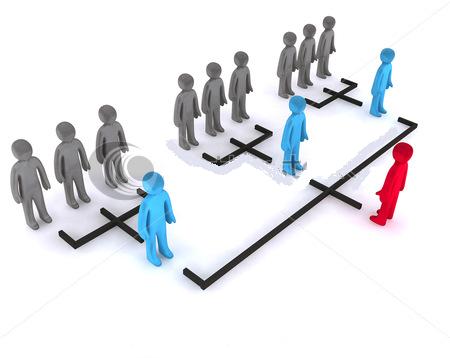
The more I see companies, NGOs, associations and other organizations struggle to make sense of who’s doing what in the organization the more I become convinced that structuring is crucial.

When I say structuring, many people directly imagine hierarchy, bureaucracy and lack of flexibility… yet that does not have to be the case. Organizational structures, if done well, will build on the expertise of individuals involved, the organizational capacity, needs and goals. These elements are the corner stone to building a successful organization that can secure sustainability and growth.

Simple yet crucial questions I ask to the organizations I consult include:

  • Who sets the organizational structure?
  • Who decides when and how new positions/responsibilities are added to the structure?
  • Is the organizational structure Functional, Projectized or Matrix?
  • Does everyone know their roles and responsibilities?
  • Does everyone know how their tasks fit with others’ tasks?
  • Is there a promotion/growth plan for the organization?
  • Does everyone know what is needed to do to move up the ladder?
  • Does everyone see the big picture, the overall structure and the logic behind it?
  • Is there a chance to solicit feedback about the structure from grassroots up?
  • Did you research structures of organizations in your industry and learn from them?

Surprisingly, most people know the answer of 2 or 3 of the above 10…and that’s when they realize they’re facing a problem with the organizational structure. The structure often seems so foggy as if it is coming from some alien planet, rather than being something that grew organically with the organization in a way to better manage its work…and reach its goals.

Building on my humble experience and the research I’ve made…the few recommendations I can give to people who are working on establishing/improving an organizational structure are as follows:

  • Observe how the organization is functioning right now, see where the bottlenecks are, and the loop holes.
  • Assess the performance of the whole organization by taking input of everyone possible, from senior management to interns to all other stakeholders.
  • Ask yourself what other structures exist for your industry and how can you best learn from them.
  • Focus on roles, responsibilities and tasks…not on the titles and positions, as they should come last after having set the structure.
  • Make sure you have the right people in the right places, the Person-Role must match or they will already be sabotaging your organization.
  • Resistance to change is normal, deal with it with utmost positivity and be as considerate and understand of other’s worries as possible or else you’ll lose their productivity.
  • Give your structure a margin of change as it might need to evolve a bit from your original plan to accommodate to some personal and organizational needs.

I hope the above gave you a better insight on creating organizational structures that work… I’m ready for all questions, suggestions and comments.

Happy Structuring!  😀

Other interesting articles:

Human Capital Management in NGOs

To be honest I’ve researched for a while to get my hands on some useful material about Human Capital Management(HCM) in the NGO sector, especially in managing volunteers…not just staff. Yet I’ve failed to find substantial and relative material to build on. Therefore the following is a compilation of my personal experience in HCM in NGOs, specifically in Lebanon, through Aie Serve and other NGOs/Clubs that I train and consult.

To  make the discussion more meaningful I’ll separate HCM into 5 discussable stages, read on for the details:

Organization’s Structural Design

To truly create a Human Capital strategy for the organization, work needs to start on the Organizational Structure first. In this context, a lot of NGOs have a staff based structure, or volunteers structure, or simply committees or even no structure at all aside from the “Board”. This will need to change since adopting an HCM strategy, the structure will need to be redesigned to better fit the current needs and provide space for growth in the future.

Crucial questions to ask at this stage are:

  • What is the current structure and is it really implemented on the ground?
  • Does the structure provide space for further growth or does it need total make over?
  • Do the positions fit in and complement each other or are there gaps?
  • Is the NGO based on volunteers, staff or both? Do they know how to interact?
  • How is the decision making done and who has it in the organization? Centralized or diverse?


Setting Roles & Responsibilities

After setting the structure, its time to know what does each and every person do exactly. The interesting and surprising part here is that many if not most of the NGOs I work with have incomplete roles & responsibilities description of the team. Many people are left without clear delineation of what tasks shall they do, what are they responsible of, who do they report to, what decisions can they make …and so on and so forth.  Therefore it is essential that each person in the organization not only knows where he/she fits in the structure but also know what role do they play. Moreover, if they wish to grow..then the path they should follow need to be clear.

 Crucial questions to ask at this stage are:

  • Are there Duty Descriptions or Roles & Responsibilities documents for the positions?
  • Are people aware of each other’s role’s and responsibilities?
  • Is regular updating and upgrading for those documents done?
  • Who is involved in drafting and modifying those documents?


Setting & Implementing Recruitment Processes

Now that the structure is clear and so are the roles & responsibilities of everyone, the challenging part is how to get those people onboard. Having a consistent and clear recruitment process is essential to ensure that all potentials are tapped and the right people are recruited.  To do this a recruitment process needs to be designed in a way that it reflects the culture of the organization, the way people will be dealing with each other. The process should be clear for all those in the organization so that they understand what shall they do if they want to recruit more people.

 Crucial questions to ask at this stage are:

  • How do people apply for the NGO?
  • Does the NGO recruit volunteers or staff or ?
  • Do members of the NGO join by invitation only or do they have an entry point?
  • Is there a standard procedure of interviews and applications or ?


Training & Coaching

Once everyone is onboard and in place, the time comes where people need to better understand how to do what they’re supposed to do. At this point, training and coaching all the new recruits comes in place. So developing a clear and flexible training program and coaching process are necessary to ensure that the new recruits are empowered with the appropriate information, skills and tools to do their duties properly. Moreover, the coaching process shall allow the recruits to not only do their roles properly but also to excel and grow as a person, and perhaps suggest improvements to the process.

Crucial questions to ask at this stage are:

  • How will the new recruits know what to do and how?
  • Who will be training/coaching them?
  • Is there a training manual in place?
  • Is there a clear coaching procedure and standards?


Performance Evaluation & Enhancement

After having set everything and people are performing and excelling, it’s very important to measure the overall performance and growth of both individuals and the organization. It is important to ensure that both individual and organizational goals are synchronized for this process to work. Moreover, assessment metrics will need to be developed either at the “Roles & Responsibilities” stage or throughout the process of execution so that a clear evaluation can be done at important turning points and end of year assessments.

Crucial questions to ask at this stage are:

  • How would you know or measure that someone is doing their role properly?
  • Who is responsible of assessing/evaluating?
  • Can a follow up and training process be designed to build the skills and fill the gaps according to the results of the evaluation?

Other Interesting Posts: