My Two Cents on Leadership

I’m going to share with you some of the things I’ve realized about leadership in the several places I’ve volunteered/worked…and I believe they do apply, more or less, at all levels and in all kinds of organizations whether for profit, non profit or governmental.

I believe a clear set of qualities can be found across most those who we look up to as leaders or enjoy working with. Some of which are the following:

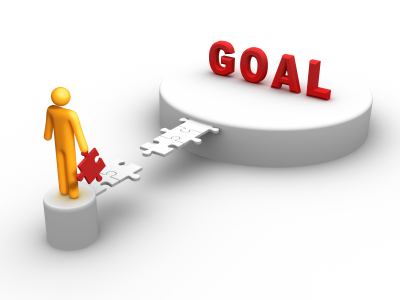
Vision: A leader without a vision is like a captain sailing a ship into oblivion. Without a clear direction, a goal or even a dream…that person is not leading but merely managing the work being done without giving much value to why is it being done, how and what for.

Trust: This has proved to be so essential for anyone to be a leader, he/she needs to be trusted and to be able to know how trust others. Without that sense of trust, the leader will quickly loose ground and wont have a team to work with.

Transparency: If the leader is not clear with those he’s working with then they will lose interest, have distorted ideas of what needs to be done, and they most probably will not have a shared common goal.

Stability: A leader needs to be to stable and strong to be able to support his/her team. Without that stability, both he/she and his/her team will crumble sooner or later. Stability comes from several factors…from within, from the society, from family, from work, finances…etc. Thus it is tricky to strike a balance between it all and manage to be as strong and stable as a mountain.

Competence: Any leader who is not found to be competent and able to implement work properly, he/she will not be able to lead a team. Being able to lead others by example proved to be one of the most effective ways. Thus sharing the successes and achievements he/she has done and can do in the future will raise the moral of his/her team and provide guidance.

Humbleness: A leader’s ego can lead to his/her downfall if it is not checked and trimmed often. The leader needs to keep his/her feet on the ground, always treat others as equals and make sure that how he/she acts/talks does not reflect any bossy-attitude, arrogance or a sense of superiority. Everyone on the team is equally important, respectful and worth giving the attention of the leader to develop and grow.

I know those aren’t much, but after my personal reflections those seemed to be the most obvious and note-worthy qualities that a person needs to have to be able to lead.

Let me know if you have others in mind 😉

My Addiction: Volunteerism


Day in day out I find myself more and more indulged in volunteer work. For years now I’ve volunteered in numerous organizations, clubs, campaigns and on some personal initiatives. Yet I wonder sometimes: What makes me volunteer? What makes so many people around me volunteer as well? And how come so many others don’t even find sense and logic in why we volunteer…

At 12 years old, I started my first volunteering role in a student based organization at my school called “Student Life Organization” (SLO). I took the first step in my life-long volunteering journey but never knew that it will a life changing experience back then.

During my school years, I took several roles in the “SLO”, joined clubs and a varsity team…but I never really thought I will go this far from university and on.

University too was full of “extra curricular activities” and so I joined clubs, committees, groups, organizations and didn’t stop there…I launched even more clubs and organizations myself…and I still serve in them day after day.

Some ask me why do I put so much time and effort? How come I don’t get bored of all those meetings, activities, workshops and projects? How come all those trainings and activities are for free and we even all pay to do them?

My answer is simple, it’s an addiction. It’s both a hobby and a conviction.

Moreover I believe it abides by Newton’s Laws of Motion (I know it isn’t meant for humans but humor me here). According to Newton’s First Law of Motion, an object at rest tends to stay at rest. Without force acting on an object, nothing will change. So if I may compare, a person at rest tends to stay at rest so we could say that all people need then is a little push, some “force”, to get them going. And once in motion, people tend to stay in motion.

That is exactly why I constantly try to motivate or “push” people to volunteer, to do something, to join me or others in some organization/activity/campaign. You never know when this small thing you volunteer in becomes a life changing experience.

The beauty of it is that unlike regular work or chores, it’s not tiring but rather refreshing and invigorating. It fills you up with so much happiness and energy to know that you have helped someone, served your community or saved something in the environment. For me it has been the sole source of optimism and motivation to do everything else in my life.

If so many millions around the world volunteer everyday …and they keep doing it..then there should be something to it.

On a final note, I believe if you haven’t volunteered in something yet..take the first step and do something and do it now! 😀

PMP Certification from PMI

I’m proud to inform you that today I passed the PMP exam and thus I am an officially certified PMP. So you’re wondering what does that mean? What is PMP? What is PMI? Well read on… 🙂

PMP stands for Project Management Professional credential and is one of the 5 credentials that Project Management Institute (PMI) offers.

PMI is the world’s leading not-for-profit membership association for the project management profession, with more than half a million members and credential holders in more than 185 countries. Their worldwide advocacy for project management is supported by their globally-recognized standards and credentials, their extensive research program, and their professional development opportunities.

Government, commercial, non-profits and other organizations employ PMP certified project managers in an attempt to improve the success rate of projects in all areas of knowledge, by applying a standardized and evolving set of project management principles as contained in PMI’s PMBOK Guide.

Professionals obtain the PMP credential to verify their proficiency in project management with an internationally accepted certificate.

Using the 9 areas of knowledge identified by PMI, they become more proficient project managers, more productive in their work and apply internationally tested and confirmed processes that enhance the success rates of any project in any field.

One of the main beliefs of PMI is that “subject matter does not matter” and thus PMP certified Project Managers can excel in their work whether in IT or Real Estate, Non-Profit, Banking, Academic, Medical, Tourism…etc.

I hope that gave you a clear overview of PMI and the PMP Certification and I wish you the best of luck in your future projects! 🙂

For more information about my professional work check my LinkedIn Profile

Aie Serve: Uniting Youth Through Service

Aie Serve Logo

—————————————————————————————–
The bellow article is featured on Youth Action Net Website
—————————————————————————————–

What began in Tunisia in December 2010 led to the mass demonstrations in Egypt starting on January 25, and now the rest of the Arab world is following. Lebanon is no exception. On February 27th, many Lebanese youth activists gathered for a demonstration against the sectarian system in Lebanon, demanding changes in both the constitution and the way daily governmental business is carried out.

This rising consciousness and refusal to succumb to the status quo is rooted in the same spirit that prompted myself and a group of friends to launch Aie Serve four years ago. Instead of staying silent, we decided to take positive action.  Aie Serve is a youth-based, youth-managed, and youth-funded organization dedicated to promoting a culture of volunteerism in Lebanon. Translated from Japanese, aie (pronounced “I”) means love.

The idea for Aie Serve came during the aftermath of the 2006 July War on Lebanon and resulted from the sharp polarization of Lebanese youth along sectarian, political, and religious lines. We started brainstorming ways of tackling this issue and agreed that three basic values were missing in Lebanon: Love, Tolerance, and Respect. We espouse love for others based on who they are and not which political background or sect they are from, while promoting tolerance and respect of others’ point of views and beliefs.

Over time, we started gathering more ideas and people, organizing ourselves while focusing on serving our community and society at-large. Aie Serve evolved from a group of friends, to a group of community-service minded youth, to a team and an organization. Examples of Aie Serve volunteer activities include book and clothing donation drives, reforestation and recycling projects, and assistance to orphans and the elderly.

In the last four years, we’ve experienced exceptional growth in the number of projects we do, our members, and our outreach. The impact we see on the ground is both fulfilling and inspirational. We find volunteerism is now contagious wherever we go. What’s more – in keeping with our mission – we find that caring for others is a universal value that brings people together and bridges divides.

Those around me know quite well that I am an optimist and a hard worker and so I believe that with a vision, hard work, and true commitment a small, dedicated group can achieve great things… and the biggest proof is where Aie Serve stands to day!

Afif Tabsh is Co-founder and voluntary President of Aie Serve. In 2011, he was named one of ten finalists selected for the King Abdullah II Award for Youth Innovation and Achievement.

Secrets of a Great Workplace

Sometimes I wonder what makes a company, organization, institution ..etc a great workplace. What are those factors that usually matter to employees to really love where they are working.

Now I’m not going to discuss whether the person is in the right type of job or not, that’s a completely different story. I am just trying to understand if people are doing the job they supposedly want, what makes the place they work at be a great one.

I was reading “The Great Workplace”, authors Michael Burchell and Jennifer Robin, and in it they write, “you need to do your job realizing that how you do what you do makes a world of difference to employees. The secret of great workplaces is relationships.”

In another chapter, the book highlights that the employees said “they believe their leaders to be credible, respectful, and fair—they trust them. They also take pride in what they do, and they share a sense of camaraderie with their coworkers.”

So it really revolves more about the relation of employees amongst each other and with their leaders or senior or managers or whatever you wish to call them.

Some people argue that what holds leaders back from doing something about this is the not having the faith that there are bottom line results from doing the right thing. Another excuse is no time. Lack of situational awareness and the belief that they should just be focusing on the business also keep leaders from focusing on the relationships that really underlie everything they do.

After further research I found that there is a institute called “The Great Place to Work Institute” and  the researchers there found that great workplaces exist regardless of size, industry, or location because the Model is based on universal “needs and values—trust of the people you work for, pride in what you do, and enjoyment of the people you work with.”

So I felt like sharing the Model with you and to get your feedback on it. Check the diagram bellow and let me know your input. 😀

The Secret…


A friend of mine gave me a DVD and a book titled “The Secret…” he asked me to watch the DVD before the movie since it somehow acts as an introduction for the book.

I did as he said and went through the DVD then the book and honestly I don’t feel it is quite right. Though I do agree with several parts and things said yet the whole “secret” lies in what the author, Rhonda Byrne, claims to be the “Law of Attraction” …yes simply one law to figure it all out.

This law supposedly allows you to get everything you want…infact the book claims the following :

The Secret has been passed down through the ages… coveted, hidden, lost, stolen, bought for vast sums of money, and known by some of the most exceptional people who ever lived: Plato, Galileo, Da Vinci, Beethoven, Edison, and Einstein, to name but a few.

The Secret book reveals how you can change every aspect of your life. You can turn any weakness or suffering into strength, power, unlimited abundance, health and joy.

Everything is possible, nothing is impossible. There are no limits. Whatever you can dream of can be yours, when you use The Secret.


But after actually reading the book it definitely seems a bit over rated…the law simply tells you that if you really focus hard on thinking and feeling about what you dream in life…you’ll get it. Yes yes you read right…so if you focus…think and feel…very hard on becoming a multi-billionaire…guess what..you will become one! … if you really focus on being happy and living safely you simply will …don’t bother if an earthquake, a tsunami, a car crash, a war breaks …you’ll just live only if you focus on it.

It got me wondering about all the people in Africa who die out of hunger, illness, fights… were they really not focusing on being happy? Living with money? Being safe? …are only the US and Europeans the ones who have had that “Secret” since ages or does it only apply to them or ?

I personally believe in being optimistic, working hard, serving your community, doing your best at everything you do, being ethical, taking care of those around you… that is more likely to get you somewhere and making you happy…and those around you as well.

The book simply focuses on selfishness, on asking the reader to be a self-centered individual thinking of the world as if it actually revolves around him/her. The book disregards the presence of God as the creator and omnipresent being. It pushes the reader to disbelieve in any higher being, any laws, rules, religion or social traditions and motivates him/her to focus on him/her self alone.

It asks you to be the center of the universe where you attract to you whatever you think and feel about the most, and so think of what you want and the universe will bring it to you…it will serve you whatever you wish.

I do ask my beloved readers to be critical of any self-help/improvement book or movie they read/watch. Infact to be critical and analyze anything and everything they read/watch/hear…to dig deeper than the words written or said…to check the background of the author and motives to what he/she wrote/said…

A Conundrum: Optimism & Reality

I feel that nagging, blaming others and feeling helpless about life is something we’re really good at…especially Lebanese.

No matter how educated or how illiterate, how young or old, female or male, with a high paying job or jobless…we got to nag about something…we got to find problems in everything from the daily issues, to political arena, to economics, to how the whole world is working…whatever issue it is..we can find something to nag about in it and we’re always the victims….but we just don’t do anything about it!

Somewhere in my mid-teens I realized that I tend to fly outside the flock…in numerous ways. This kind of used to make me feel not on the same mental/personal/social page with others my age…whether at school or neighbors or family or…etc. One of those “odd” things I have in me is being optimistic …or what some like to label me “Utopian”… I tend to look at the bright side..even in those stressful moments or when bad things are happening to me or around me…

It is like that quote that says “If life gave you lemons, make lemonade!” …some…or let me say many around me..don’t get it. They don’t see the option of “lemonade” they just see “oh crap, I gotta eat those?!” (metaphorically ofcourse).

So life and people I meet along the way tend to leave an impact in me, and infact many tried to explain to me, one way or another, that being a “pessimist” or  what they like to call them self “realistic” is well…wiser…more profound..more mature. But hey..talk to me here…how come being a pessimist is more profound? ..how come that if you are negative and nag about what you got or didn’t get in life, make you any more mature?

I have to say I’m happy with that “Utopian” title…and I live by it everyday…living that optimism…that positive thinking(I don’t mean that I don’t get sad, I don’t frown and I don’t have mood swings…its just that I tend to be positive most of the time)…I try being that kind of person that if I look back 50 years from now …I’d say I’m completely content, happy and proud of every decision I’ve made…and infact proud of that positive attitude that got me through those 50 years!

So here’s the conundrum for you…my fellow reader… does reality have to be negative, harsh, demanding and unfair (atleast it is according to what I hear people say about it) or can it really be more shiny, happier, safer, more heavenly than we think it is…???

I guess it is all in our heads, whatever we decide it is …it will be…but the trick here is not just to THINK of it this or that…its about ACTING on our thoughts and decisions.

So what is your choice???

Other Interesting Posts:


Ideas to Actions

We, as human beings, have a zillion ideas flying around in that mind of ours. Yet as Charles Landry once said “the single biggest problem in the world is not finding great ideas but getting great ideas to move, to flow” and this will be the focus of my post. I aim at showing how to move from ideas to actions. From dreams to reality.

Drowning in our ideas and getting stuck on what to do is in itself a thinking problem, a self-inflicted problem in most cases. What we need is to rethink our way of thinking about ideas to create the right movement in the right direction, the rest will follow.

Here are few steps to consider:


Rethink complexity.
We create complexities, mind barriers and problems by simply over-analyzing our situation, given and capabilities. Often outsiders see things more objectively and clearly, so do share your ideas and “worries” with some trusted people to get feedback and their perspective before you jumpy into over-analyzing.


Rethink systems.
If you’re in a “system”… be it a work environment, friends, community or physical location that is being resistant to change, to comply to new ideas…rethink the system. If you have the power to change the system before you tackle new ideas, do so…if not, then start searching for a newer system that better encourages the very behavior and ideas you seek.


Rethink ego.
Our ego can sometimes hinder us from exploring new ideas, from realizing our failures, our limitations and our resources. We keep on rearranging the deck chairs on a sinking ship by keeping busy and deceiving ourselves that we’re making progress.


Rethink boundaries.
No idea is too big or too far-fetched, growth and progress often needs exploring new territory, so do take that leap of faith to go into undiscovered forests.


Rethink habits.
We are what we do often, so do reflect on your habits and see whether those are pushing you forward towards achieving your dreams and implementing those ideas or are they pulling you back? Failing to realize the impact your habits have on you might mean that you’ll stay stuck where you are.


Rethink failure and success.
Two faces of one coin, one cannot come without the other. If you’re afraid of being wrong, embarrassed by failure or paralyzed by insecurity, you will never find the solutions that lead to meaningful growth.. On the other hand, you need to know what success looks like. Muddy expectations lead to exhaustion and defeat before you even get started. Praise short-term accomplishments to appeal to your heart and not just your head. It will keep your ideas moving along.


Rethink the possible.
In most cases it just needs that extra push, that bit of motivation, that one voice to tell you “Everything is feasible!”. Many of the things that seem possible and even trivial today were once impossible, so don’t let anything hold you back and go for it!

Seven simple steps with a great impact. Everything is feasible and all ideas can materialize, dreams can become reality…and it’s all in your head!

HARD Goals Vs SMART Goals

We’ll I’ve been hearing/reading about SMART (Specific, Measurable, Achievable, Realistic, Time-bound) goals for ever now. Inspite of the fact that they keep on drilling them in our minds and making sure we’re all abiding by those 5 words to draw our plans, projects and visions…I still don’t really feel completely convinced.

When talking about what I want to achieve, when talking about what I’m planning to work on in my organizations..I don’t think I always have “SMART” goals in mind…infact rarely do I start with those “SMART” goals to rally people and inspire them …rarely do I recruit volunteers to assist by telling them “we’re going to improve X by 30% and remove 11% of the hurdles in the coming 4 months” …that really doesn’t excite me…doesn’t push me to explore new grounds…they’re good on paper…good for diagrams and figures…but they rarely inspire me…or others.

Most of the time they actually limit us…they are a repetition of what we’ve done earlier…we tend to take the safe road …putting down numbers and deadlines that we feel comfortable about…that we know match our current resources…our current skills…

After reading a book called “Hundred Percenters” by Mark Murphy I’d like to suggest a new kind of Goals… HARD Goals…and by HARD I mean Heartfelt, Animated, Required and Difficult…here’s why…

Heartfelt: Whenever I have something that touches me…that instills some feelings in me…its then that I start thinking of starting something new…its then that I feel a bigger purpose driving me… whether its empowering youth, helping children, guarding the environment, or starting a new business initiative…its that noble cause..that idea that clings to my heart that makes me start dreaming.

Animated: How many times do we get goals that practically mean nothing to us…that we can’t really imagine or envision …imagine if Martin Luther King, Jr. had stood on the steps of the Lincoln Memorial and said:

Our goal should be that within the next 30 years, the incidents of hate crimes will be reduced by 63% and

that the percentage of minorities living below the poverty line will be no higher than the percentage for any other racial group.

How’s that for an inspirational speech? exciting? does it rally anyone? I don’t think so…infact I’m glad he said:

I have a dream that one day on the red hills of Georgia, the sons of former slaves and the sons of former slave owners will be able to sit down together at the table of brotherhood. I have a dream that my four little children will one day live in a nation where they will not be judged by the color of their skin but by the content of their character.

Now that’s something both inspiring and imaginable …I can really look forward to ….no numbers…no deadlines…nothing “SMART” bout it…yet it really left an impact…

Required: How about all those “SMART” goals that if achieved, or not achieved, they might not really matter…life will not end at their door-steps. I don’t want my goals to just be a vision of a nicer future…I want them to be necessary…I want to show people that they are required and must be done…that those goals cover certain current or future needs and that by achieving them, life will really be better…tomorrow will be brighter.

Difficult: Yes you read it right..I want them to be difficult…I want them to be challenging. I don’t want those “achievable and realistic” goals…Some say that very difficult goals are demotivating…I say everything is feasible and every problem has a solution. Anyway, how difficult is difficult? well not much…come to think about it …what resources will you need? what new skills will you have to learn? …Personally if I’m not learning new things all the time and if I’m not pushing myself and others to be better…do things they never thought they can do before…achieve the dreams that once were impossible…then my goals are not difficult enough!

In the end, when talking about those HARD goals to whoever my audience/ team/ stakeholders/ beneficiaries are … I want them to drool over them…I want their hearts to throb for them…I want to see their eyes widen up…and to get their minds hard at work to figure out how and where to start….

So from now on…I will be using HARD goals..I hope you do to! 🙂


Other Interesting Posts:


Knowing the Past to Understand the Present and Plan for the Future

Sometimes we miss out on that simple thing we call the “Past”, in fact I’ve realised many don’t even give it any attention neither feel like its important to know about it…we’re all so obsessed with whats going on now and what next?

What we don’t realize is that it holds so much information, so much wisdom and so much experiences that we can not ever accumulate in our life time. Yet, knowing all that, many don’t dig enough into it…and I’m not talking here in terms of one’s own past, but rather the past of a whole country, nation, and civilization in general.

Go back to the history books and you will realize that human civilisation is a “de-ja vu” happening over and over again. Different times, different places, different people…same story with a small twist. It gets me wondering sometimes, if those people actually read, understood and analysed what happened in the past, would they change or would they still have done what they previously planned to do?

Wouldn’t it be much more useful if when I’m facing any issue in my life (whether career or personal or political or national or …) I do know what happened in the past in such cases and decided accordingly? Rather than just contemplating in the way I feel and like and what people around me say and all those unknowns?

Infact aside from this simple example, think of where we stand today…in the present…and you’ll realise it is simply the accumulation of events, plans and decisions done in the past…and so to really understand where we are in life…it is crucial to actually know what our predecessors did and why.

Taking it a step further(hypothetically), now that we thought and reflected on the past and got a better understanding of the present (hopefully that is) it is much easier to see the big picture and many of the underlying details of the previously foggy future. At least now we understand better were we stand in this world, how are others related to us and how do we relate to the overall progress of civilisation and where might it all probably lead next.

I can sit here, contemplate and right for hours…but I do not want to bore you but rather instigate you to ponder and give me your feedback…

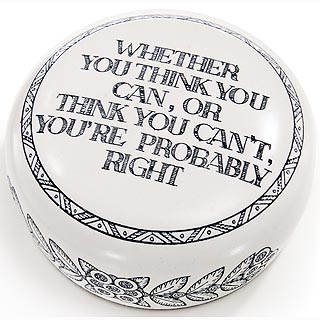
In the end I’ll leave you with this quote/drawing….

Other Interesting Posts: