3 Key Roles of NGO Board Members

NGO Board Pillars

For years now I’ve been involved in NGOs and I’m constantly being surprised with how people perceive Board Members and how Board Members themselves perceive their role. To some, a Board is a group of people who endlessly do meetings after meetings with no avail and to others, it’s some mythical, grandiose, elitist group who got special powers to lead the organization. So let me help you demystify all that…

My involvement ranges from small local clubs to a national organizations to branches of international organizations.  Irrespective of shape, size or topic of those NGOs, I can easily draw a line of similarity among them.

To start with, the Board is sometimes called Board of Directors, Steering Committee, Executive Board or Executive Committee, so in spite of the naming diversity, the roles and responsibilities stay the same.

So let’s talk about the core of the issue. Board members have 3 key roles that form the pillars of any NGO and are as follows:

Decision Making: Board member are usually the founding members or are elected members that lead the organization. In this context, all major decision making in the organization goes through them. Now it has been noticed over and over again that many Board Members become passive and rather apathetic to decisions being taken, which makes the whole organization go biased towards the opinions of the remaining Board Members. So if you’re on a Board of an NGO and you see this happening around you, don’t freak out, you’re not alone…its a trend!

Yet it’s important to deal with this issue as it is crucial to have all Board Members involved in all decisions or else you’ll start seeing resistance and conflicts arising here and there every once in a while, especially from those same inactive Board Members.

What makes decision making in NGOs different from Private Sector or Governmental Institutions, is the fact that everyone’s opinion matters and most decisions are done either democratically or through consensus, so it should never be a one man show. If it seems to be or become a one man show, then you know it’s about time to change some things…

Organizational/Executive/Functional: In addition to having decision making role, all Board have a distribution of roles and responsibilities where the most common structure is “President, Vice President, General Secretary, Treasurer & Accountant” thus each of those individuals not only has his decision making role, but also a functional role to play, whether it’s taking care of financials, or internal communication or following up on tasks or heading committees..etc. Thus if those tasks and responsibilities are implemented properly, you would’ve successfully built the second pillar of the NGO to ensure that it stands tall and becomes sustainable. When this role is done properly, the internal dynamics of the organization start functioning properly.

Jack-of-All-Traders: Yes you read it right, as soon as you become a Board Member of an NGO you suddenly get to become a jack of all trades as your responsibilities will expand beyond what you expect. So you roll up your sleeves and you start doing tasks related to strategic planning, outreach, public relations, proposal writing, volunteer management, project management, reporting,  web development, graphic design, fundraising, training, consulting, event organizing and so on and so forth. So when you’re joining the Board of an NGO, its not just about doing your decision making or your functional role, but you’re expected to be involved at all levels, in all your projects and operations and to become well knowledgeable about them to assist, support and improve what your organization does.

So in a nutshell, I can say those 3 pillars are what makes a healthy Board and thus a healthy organization if they were implemented properly and professionally. If you’re a Board Member, and you feel you’re missing out on any of those…then double check with your team as you are probably holding your organization back because are doing them. Whereas if you’re doing all three and you feel other Board Members aren’t, then its about time you share the workload with them.

On a last note, properly leading an NGO can be as consuming and demanding, if not more demanding, then leading your own company due to the social factor of it and having several decision makers with you on equal levels of authority, ownership and responsibility…

So if you’re a Board Member on an NGO… God bless you! and if you know someone who is…now you know why they do so many meetings! hehehe

Other interesting posts:

Aie Serve Animation Video

Dear Friends and Readers,

It is with great pride that I share with you the Animation Video for the NGO that is dearest to my heart, Aie Serve. In this context, I invite you to watch the video, check the website, the Facebook Page  join the organization or share with me ideas if you’d like to collaborate/partner to better serve the youth!

Enjoy!

Afif


Guest Writer: “#1 Business Startup Killer” by Roger Khater

Dear Reader,

I’m glad and proud to present to you my third Guest Writer on the blog, Mr. Roger Khater.

Roger Khater is a Serial Entrepreneur with an Electrical Engineering degree from USJ/ESIB; in addition to his responsibilities as the Managing Director at IP Engineering Pro, he has main board roles and major managerial functions in Caliber Workforce (Human Resources Services) as a Partner and Maktabi (Virtual Office Services) as the Owner. Roger also serves as the President of the PMI Lebanon Chapter.

To know more about Roger, check his LinkedIn Profile or email him at i@rogerkhater.info

Enjoy the read!

Afif

—————————————————————————————————————————————————-

Many entrepreneurs whom I often meet have great business ideas, very few though have a good business plan, and the worst are the ones who only have a fancy website, a distinguished business card but no or not enough clients.

Call me old fashioned but the truth remains, starting a business is all about selling, assuming the business idea is viable. The act of selling involves customers, who are real people after all. So bet on people and invest in relationships.

What is the #1 business startup killer nowadays?

It is the course of actions that is driving our young entrepreneurs into having all the necessary business vehicles, from business identity, to website, to social media, etc… But they forget the key business aspect that is to sell their products or services to real people.

I never recall selling anything to a sheep.

If you have a business idea, don’t waste your time, just sell it. Get your first few customers and leverage on them. Capitalizing on your personal relation, enhance the trust quickly and stay close when needed.

Forget about the shiny stuff, they will eventually come at a later stage.

After a few successful deals, reassess your market in $ value, know your competitors, they exist in one form or another, and only now you can decide if the market size is enough or suitable for you. Embrace this market, make it your target, position your portfolio, have a value proposition and again go sell for more.

If after 2 years you are still stuck with few customers that do not generate enough income, drop the idea, change business line and redo the exercise better. Always ask for help, you need that, secure as many mentors, they will make a difference.

The key to success is gaining customers by selling to people.

The accessories are merely a plus.


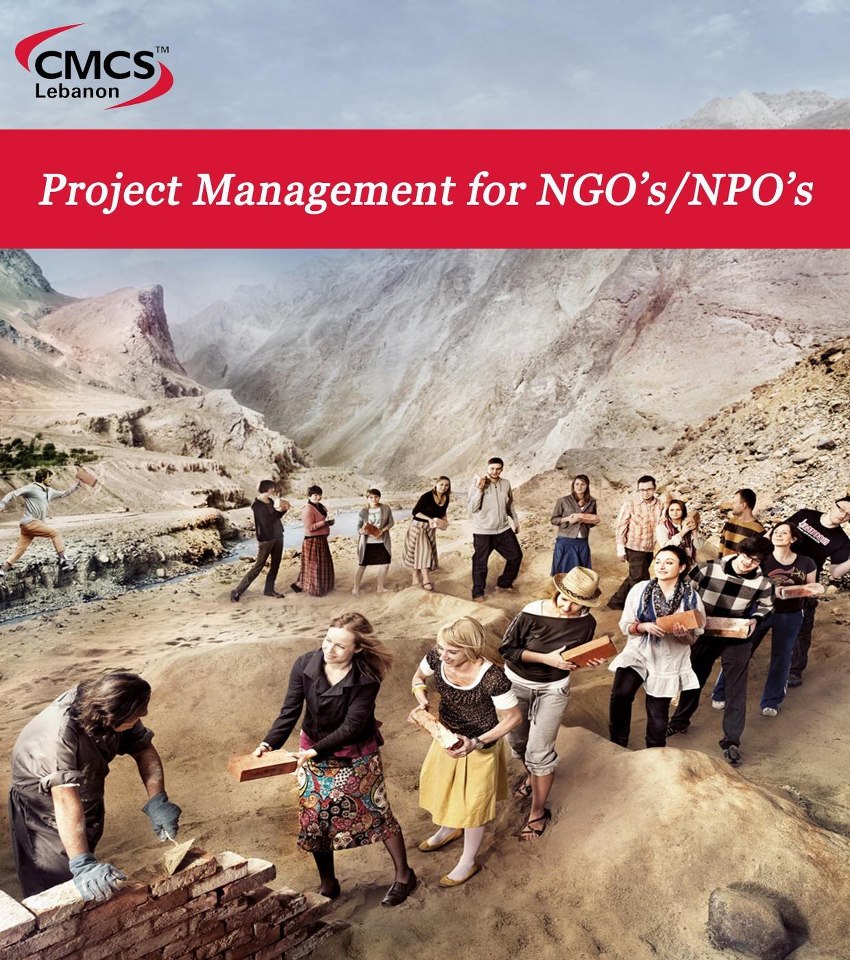
Project Management for NGOs Workshop

Dear Readers,

I’d like to invite you to a workshop that I’m organizing and delivering as part of my work with CMCS Lebanon. Details below.

Workshop Topic: Project Management for NGOs
Date:  September 16 & 17, 2013
Time: 9:00am – 5:00pm
Venue: CMCS Lebanon Office – Hamra
Facilitator: Afif Tabsh, PMP®

Target Group:

  • NGO’s Board Members & Founders
  • NGO Consultants
  • Program & Project Managers/ Coordinator/ Assistants
  • General/ Grant Coordinators
  • Team/ Committee/ Task-force Leaders
  • Company Managers with interest in CSR Projects/Programs
  • UN & International Organizations’ Staff

Learning Outcomes:

  • Understand the difference between NGO projects and private sector projects.
  • Understand and identify how to use standard tools and techniques of project management in NGOs.
  • Understand the relationship between the Knowledge Areas in the PMBOK (PMI) in relation to NGO’s terminology and way of work.
  • Understand how to develop a project idea into a full project management plan.

Description:

  • A practical hands-on workshop designed in alignment with the international standard of project management along with the best practices in Project Management in NGOs.
  • Covers key topics and issues that everyone can build on to enhance the way they transform project ideas into fully functioning plans.
  • Includes numerous discussions, reflection sections and exercises.
  • Is approved by AUB and certified by PMI thus PMP/CAPM holder can claim PDUs for it.

Fees:
$ 550 US (including CMCS Customized Course Manual, a Process Chart, Certificate of Attendance, 15 PDUs, and Snacks & Refreshments). VAT included.

For Registration: PM for NGOs Registration Form

For More Information:
OFC: (+961) 1 345111
Mobile: (+961) 71 69000
FAX: (+961) 1 346111
Email: lebanon@cmcs-mena.com

Other Similar Posts About PM and/or NGOs:

Guest Writer: “Effective Communication: Guidelines & Tips” by Dania Dbaibo Darwish

Dear Reader,

As posted earlier, I’m hosting exceptional guest writers on my blog to share some of their experiences, knowledge and perspective that are worth shedding light on.

In this context, my second guest writer is Mrs. Dania Dbaibo Darwish a holder of a BBA & an MA in Psychology from AUB. She is an Associate Certified Professional Life & Career Coach, a Certified Master level NLP practitioner, a Certified Hypnotherapist, & a trained Counselor. She has a background career in Sales & Marketing of consumer goods; & as a Psychology instructor at AUB.  For several years now, she runs her own practice at Coaching Your 3Ps (Personal & Professional Progress) as a Coach, Counselor, Hypnotherapist, & Trainer. Dania is the founding president of the Lebanese Coach Association (LCA) & is very active in other NGOs. She’s known for her dynamic & positive personality.

To get to know her better check:  Website || Blog || LinkedIn || Twitter || YouTube || Facebook  || Pinterest

Enjoy the read!

Afif

—————————————————————————————————————————————————-

You all learned how to talk, but did you all learn how to communicate effectively? Effective and positive communication is an advanced skill that requires your conscious practice and effort until it is mastered. It serves living harmoniously with others, persuading, and influencing family, friends, and colleagues on the job. Once you know few secrets about proper communication, your chances of succeeding in all life domains grow up exponentially. Furthermore, your internal voice will frequently be screaming “Victoryyyy!” in major disagreements as you remain totally agreeable to your counterparts. All it takes is entering the mindset of the person(s) you’re communicating with, and then positively bringing them to your own. As a first step, here are some few guiding essentials for casual conversations, interactions, requests, arguments, or confrontations:

Build rapport: Subtly match and mirror the person you’re talking with (i.e. get in the rhythm of the way they’re speaking, body posture, use of language, etc….). Generally, people who are like each other tend to like each other, so do your best to synchronize your way with theirs.

Listen (don’t just hear): We have two ears and one mouth mainly to listen twice as much as we speak. Instead of mentally rehearsing your next argument, actively listen to what really matters to the other person. Their needs will be your guide to satisfy instead of deviating off-topic.

Words, tone, and body language: In the famous Mehrabian study, these turned out to have an effect of 8%, 37%, and 55% respectively. Never underestimate, therefore, the profound effects of the silent messages behind your unspoken words. It’s “how” you say things that gives much more meaning.

Address them by name often: You’ll be reaching out for their most prominent identity and softly caressing their ego each time. It will sound like flattery.

Maintain eye contact: This ensures you’re retaining connection. It gives the message that you’re interested in what they’re saying and that they’re heard. Remember how it feels when you’re talking to someone and they look away or roll their eyes? Yes…. Utterly disrespectful!

Empathize: Use your interpersonal intelligence and the ability to be in the other person’s shoes to identify with their feeling, ideas, and situation. Ask yourself: what is it like to be in their position. Paraphrase what they’re saying when you can. This conveys that they’re well understood.

Always ask good questions: You can always direct the flow of your conversation through asking open ended questions. This is a sure way to release your counterpart’s defensiveness and probe them to come to mutual conclusions. Avoid giving unsolicited advice till you’re asked.

Once you arm yourself with the above necessities in your interactions, you can further use the following tips to make any point you want with least resistance by your counterpart. You can disagree without being disagreeable; influence while valuing the other person’s stance; and pleasantly direct others’ behavior. Depending on the argument or the situation, you can:

Get them to agree more:  For beginning conversations, ask questions to get them to agree on, say, 3 things. This is part of building rapport. Questions like: the weather is too hot this morning, isn’t it? The traffic was unbearable today, right? You can, then, introduce your request or the point you want to make.

Focus on giving feedback: At times, you’d want to appraise a piece of work or assess a situation. Don’t criticize by just saying what’s not right. Praise the good points as well. As a whole, your opinion will be better received.

Sandwich your feedback: Whenever you have something negative to say, make sure you sandwich it between two positive statements. Start off by complimenting the other person somehow (relevant attributes, qualities, or work); give your negative opinion (in a nice way of course); and then finish up your statements by praising again. These positive statements act as a sandwich buffering any negativity sensed in between.

Feed forward: When you give feedback, you may need to state the preferred scenario for a specific outcome (e.g. behavior or way). It is an assertiveness technique used in relationships (parent to child, or in partnerships) and mentoring. Don’t remain vague about future direction. Probe them by asking questions to get to the ideal response, or suggest it when they don’t know.

Use the “agreement frame”: Nothing beats defensiveness than agreeing first. Use points in your counterpart’s view to agree with, first. Say things like: “I agree that…. And I respect that…. And I really appreciate that….” Then say: “at the same time, I think that…..” stating your disagreement. Never use the word “but” after agreeing. It negates everything you said before it.

The pleasant “no”: Don’t get caught in saying “yes” to others’ requests at your own expense. When you offer an explanation to why you can’t handle their request, you’ll be saying “yes” to yourself. You can start off by saying: “Yes, I appreciate your resorting to me to handle this. I really would like to help you out. At the same time, I have to…..” and list the reasons why you can’t while offering an alternative way or a later time to do it.

Focus on solutions:  Avoid getting sucked up in discussing the problem and rather consider the alternatives to resolving it (more on “win-win” solutions). In doing that, consider the interests and benefits to both of you (you get that through empathetic listening and asking probing questions).

The above tips are really powerful in maintaining positive interactions with others. After all, research shows that for any relationship to thrive, it is necessary to have 5 positive statements to tip off the effect of one negatively stated comment. To become a positive effective communicator requires a conscious decision. With practice, it will become second nature like all other arts to be mastered :)

Awarded the Laureate Global Fellowship

Dear Friends and Readers,

I hope you’re doing well. I am writing this post to gladly announce that I have been selected to be 1 of 20, from among thousands of applicants worldwide, to be awarded the “Laureate Global Fellowship”  as part of the YouthActionNet program by the International Youth Foundation.

Launched in 2001 by the International Youth Foundation, YouthActionNet strengthens, supports, and celebrates the role of young people in leading positive change in their communities. Each year, 20 exceptional young social entrepreneurs are selected as Fellows following a competitive application process. The year-long Fellowship program includes:

  • Skill-building
  • Networking and Resources
  • Advocacy

You can read more about the 2012 Laureate Global Fellows Announcement and check my profile and the other 19 Fellows on the Meet the Fellows Page. Moreover, you can better understand Aie Serve, the organization that I’ll be representing, by visiting its Website and its Facebook page.

I’m excited about this year-long fellowship and eager to learn, grow, network and share! 🙂

Guest Writer: Lessons Learned from Politics by Radhia Benalia

Guest Writer: Lessons Learned from Politics by Radhia Benalia

Dear Reader,

As per my previous announcement this month, I will start hosting guest writers on my blog to share some experiences, knowledge and perspective that are worth shedding light on.

In this context, my first guest writer is Mrs. Radhia Benalia, the Deputy General Manager of CMCS Lebanon, a 2009 candidate for the BC Liberals for the constituency in Canada, an avid public speaker and translator with strong knowledge in project management. Her article is shedding light on her political experience when she ran for office in Canada in 2009. To get to know her better check: LinkedIn || Blog || Pinterest || Twitter

Enjoy the read!

Afif

—————————————————————————————————————————————————-

Lessons Learned from Politics

In 2009, I was nominated as the candidate for the BC Liberals for the constituency of Surrey-Whalley in beautiful British Columbia. A unique experience. The election campaign happened “fast and furious” as I was nominated a few weeks only before elections. Fact is: I have done, seen, and lived the unanticipated, and these are the lessons learned I wanted to share:

Lesson 1:

If you ever think of going into politics, I’ll say you better keep pristine records. The other camp will cheerfully cut you to pieces and feed you to the dogs if they have anything on you. Even speeding tickets. Don’t break the law; don’t even lie about your résumé. You know what they can do with that!

Lesson 2:

Practice public speaking. Tirelessly. I was fortunate enough to have been teaching public speaking for a few years, and I surely had the chance to practice, and for a “rookie”, I did pretty well in debates and speeches, so I’m more than grateful for what I had learnt prior to my entrance into politics.

Lesson 3:

Hire a campaign manager that has the guts to tell you off and criticize you. Mine did repeatedly. He made me work 3 shifts and got me to talk about things I never thought I would a hundred miles an hour. Besides, he took care of me, chased me around every day of the campaign with a pack of vitamins, and made sure I ate well. My campaign manager was more important than I was for the campaign, and I couldn’t have done it without him.

Lesson 4:

Lose weight or wear those braces before you are nominated. What I mean to say is if anything makes you extremely uncomfortable about your looks, then remedy to that before you see yourself on camera and become devastated. You’ll see a lot of yourself everywhere. Every day.

Lesson 5:

Choose a campaign photo you’re comfortable with.  You’ll be seeing the photo on billboards, posters, and even on TV; take the time to choose. Three years later, I still am glad I wasn’t forced into making a quick choice.

Oh, and about comfort, make sure you have a few pairs of very comfortable shoes. Trust me: The investment is worthy.

Lesson 6:

If you don’t have enough good people around you, don’t do it.

I was extremely lucky. My team was wonderful. Everyone worked so hard, and they were known for being one of the most supportive campaign teams ever.  I couldn’t have done it without them either.

Lesson 7:

Walk tall.

You‘ll be criticized over and over again, and then some. You’ll take heat, and it’s not going to be pretty. Candidates are criticized by journalists, constituents, and even by people who endorse them. Listen objectively, learn, and work on improving yourself. Do not waste time feeling resentment. It is useless.

Lesson 8:

Make yourself available to your constituents. Listen with heart. During the campaign I was “summoned” to a meeting with a group of citizens who were irate about the way the party I represented handled a safety issue in the area. I wasn’t the decision maker, but lobbied for the concerned constituents, and they knew I cared. It feels good to remember that I did not let those people down.

Lesson 9:

Learn about the history of your party and your constituency, and fill in any gaps you might have. You’ll be asked about things that happened when you weren’t even born and will be sentenced to political disgrace if you do not have the answers. I was once asked about a constituent allegedly abused by the police. I hadn’t heard. Trust me, I didn’t look good then.

Lesson 10:

Nothing is off the record with journalists. When my signs were vandalized during the campaign, I had a journalist make me think four times over an interview that I wasn’t on camera anymore in an attempt to “elicit” what she wanted me to reveal. My team had warned me, and fortunately, I didn’t beep a word.

Lesson 11:

Keep your family close. Do not let your campaign team become the “middle-man”.  Always make sure your children know where to reach you. Listen closely to your spouse, and do not make any major decisions about your career without your family. They will be part of every bit of it. My family stood by me every minute of it, and I do thank them for that.

Lesson 12:

Be ready to move on whatever happens. Your life does not stop on ballot night. Whether you make the seat or not, there is much more to think about , work for and live for.

Lesson 13:

Read the numbers well. I was glad to find out that I had gotten more votes than my incumbent opponent did the first time he ran. Definitely what many considered a huge success, especially considering all the circumstances surrounding my nomination.

In Conclusion

I hope this was helpful. However, I’d like to say that the biggest lesson I have learnt from my political experience is not to enter politics unless it is for wanting to make a change, a good one. It is only then that it can be rewarding.

Being a public figure and submitting yourself to scrutiny is definitely not a bed of roses. It takes a toll on your health, personal life, and even your freedom. If you’re doing it for the power or for the money, then DON’T. It is just not worth any part of it.

3 Elements of Mind Mapping

Image

Many have seen me use mind mapping in meetings, workshops, brainstorming sessions and even in project planning. Now what many don’t know is how and when to use mind maps. So I’m going to share with you some quick insights on its origin, usage and basic guidelines.

Origin

“Min-Map” as a term was made popular by Tony Buzan in Britain in the 1950s though the term itself was present before. Nevertheless, visual representation of information is not a novel idea, it dates back to the third century when Porphyry of Tyro, a philosopher, graphically represented Aristotle’s concepts. Back then they knew the value of graphical representation of ideas and it’s still valid till today…people retain graphical information more than textual.

Usage

If, like most people, you think that mind maps are a tool for brainstorming only…think again! It can be used in a multitude of ways..some of them are:

  • Note Taking
  • Project Planning
  • Cause-Effect Analyses
  • Root-Cause Analyses
  • Brainstorming
  • Evaluation
  • Creativity Enhancing
  • Concept Explanation
  • Listing of Related Items

Obviously the list is not exhaustive, but it gives you a good idea of where to start.

Guidelines

Now if you’re planning to do a mind map, here are few recommendations by Buzan himself (with personal amendments) to ensure you’re utilizing it well.

  • Start with a word or image at the center.
  • Use not only words but also images, diagrams, drawings or anything that helps in expressing.
  • Switch between Upper and lower cases when needed to stress on some main ideas.
  • Each word/item is to be put on a line by itself, they don’t like sharing the same line.
  • All items must be connected starting from central idea/word/image and growing outwards, no hanging fruits.
  • Draw thicker/longer lines for more “important” ideas.
  • Use different colors for branches, ideas..etc. to stress on differences.
  • Try out several small mind maps to find your style before you start using it for business or studying.

I hope the above helped a little bit and I wish you the best of luck in mapping your mind!

Blog Announcement

Dear Readers,

I hope you’re doing well. I am writing this post to inform you that there will be a new twist to my blog.

Starting this month, I will be hosting articles from guest writers who are subject matter experts, thinkers, philosophers, activists and creative minds to be shared with you. The aim is to spread some knowledge and inspiration. Not only that, but also to shed light on some of the individuals I believe are worth being put under the spotlight for who they are, what they know and what they’ve achieved.

Moreover, I will continue posting as usual with a special focus on an over-arching theme of “Simplification” or “Simplifying the Complex” as I believe our world is full of wonderful things that get lost in complexity …so my aim is bring it closer to you in a simplified version…hoping it would intrigue you to dig deeper if interested.

Stay tuned!